
Earth's "Mini Moon" and Its Imminent Disappearance
WORLD NEWSFEATURED
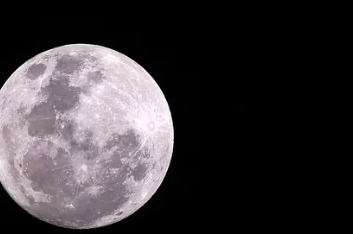
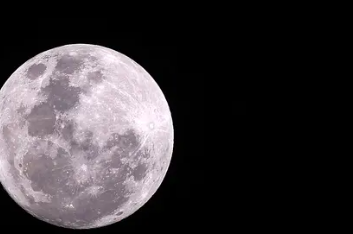
Earth has a mini moon—a small, temporary natural satellite that has been orbiting our planet. While the Moon we are all familiar with has been orbiting Earth for billions of years, mini moons are quite different. These tiny objects, often asteroids or space debris, are captured by Earth's gravity temporarily before they escape or burn up in the atmosphere.
One such mini moon has been making headlines in recent days due to its imminent disappearance from Earth's orbit. Let's dive into the details of what a mini moon is, how it got there, and why it’s disappearing this week.
What Is a Mini Moon?
A "mini moon" is typically a small asteroid or piece of space debris that is briefly captured by Earth's gravity. These objects are usually only a few meters to a few tens of meters in size—much smaller than our regular Moon. Mini moons are also known as temporarily-captured objects (TCOs) or temporarily-captured asteroids.
They’re often in a highly elliptical orbit around Earth and stay in orbit for a relatively short period of time—from a few months to a few years—before being ejected by Earth's gravity or pulled into the atmosphere.
The most famous mini moon to date was 2020 CD3, which was discovered in February 2020. This tiny object was only about 1.9 to 3.5 meters in diameter, and it orbited Earth for nearly three years before it was no longer detectable in April 2023.
How Did Earth’s Mini Moon Get There?
Mini moons are captured by Earth’s gravity when they come close enough to be drawn in. These objects usually come from the asteroid belt between Mars and Jupiter or even farther out in the solar system. Most of the time, objects that pass Earth are too fast to be captured by its gravity, but occasionally, their speed or trajectory allows them to be temporarily pulled into orbit.
The process is a bit like a gravitational slingshot, where a small object swings by Earth and ends up caught in its gravity for a short time. Over time, however, Earth's gravitational influence weakens, and the mini moon will eventually either escape into space or burn up upon re-entry into the atmosphere.
This Week’s Disappearing Mini Moon
The mini moon currently in Earth’s orbit is expected to disappear from our planet's gravitational pull this week, likely sometime in late November 2024.
Why is it disappearing? There are a couple of reasons:
Gravitational Interactions: Over time, the mini moon's orbit around Earth will become unstable due to gravitational forces. These forces, including interactions with the Moon and other planetary bodies, can cause the object's orbit to slowly decay. Eventually, the object may be flung out into space or burn up as it re-enters Earth's atmosphere.
Atmospheric Entry: Some mini moons are not stable enough to maintain their orbit for long periods, and they may re-enter Earth's atmosphere. In such cases, they can disintegrate due to the friction and heat caused by the atmosphere, effectively causing them to "vanish" or break apart.
For the mini moon in question, it's likely that its orbit has become unstable and it will either be ejected from Earth's orbit into deep space or enter the atmosphere and disintegrate. Astronomers are tracking its trajectory closely, and it’s expected to be gone by the end of the week.
What Happens After It Disappears?
Once the mini moon disappears, it will no longer be in orbit around Earth. If it is ejected into space, it could remain a small object in the vastness of space, potentially becoming a long-term resident of the solar system. On the other hand, if it burns up in Earth's atmosphere, it will likely leave no trace behind.
For scientists, studying these mini moons while they are here provides valuable data on the movement of asteroids and space debris. The capture and eventual disappearance of these objects help astronomers better understand gravitational dynamics and the interactions between small bodies and planetary systems.
Mini Moons: A Rare Phenomenon
Although Earth’s mini moons are fascinating, they are extremely rare. Most of the time, asteroids and space debris simply pass by Earth without being captured. The fact that we have discovered and observed a mini moon in recent years is a testament to the growing capabilities of space observatories and telescopes.
The study of these objects, even for the brief time they are in our orbit, provides important insights into the behavior of small celestial bodies and how they interact with larger planets like Earth.
Conclusion
Earth's mini moon, currently orbiting our planet, will soon disappear, either escaping into space or burning up in the atmosphere. While mini moons are not a permanent feature of our planet’s orbit, they are a rare and fascinating phenomenon that help scientists learn more about space and the forces that govern our solar system. The disappearance of this mini moon reminds us of the dynamic and ever-changing nature of space and the constant movement of celestial bodies around our planet.
the LA Hours © 2024
Reframe your inbox
Subscribe to our newsletter and never miss a story.
We care about your data in our privacy policy.