
Ghosts in the Rock: Searching for Life on Mars
A study of rocks on Mars’ surface (in an ancient river valley) has found unusual compounds and nodules that might be signs of ancient microbial life. It’s not confirmed, but it’s one of the more intriguing astrobiology findings recently.
WORLD NEWSSCIENCE
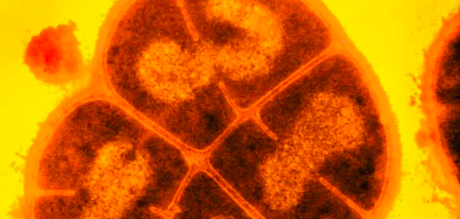
In a lab lit by the glow of high-powered microscopes, a team of planetary scientists stare at images beamed back from millions of miles away. On the surface, they are just pictures of rocks: cracked, nodular, flecked with curious patterns. But to those who study them, they may be something far more profound—possible biosignatures, whispers of ancient life on Mars.
The discovery comes from a dried-up river valley once carved by flowing water. Analyzing the chemical fingerprints of the rocks there, researchers found odd compounds and spherical nodules that don’t quite fit the expected picture of purely geological processes. Some of these features, they suggest, look eerily similar to formations created by microbes on Earth.
“It’s not proof,” says Dr. Anjali Rao, a planetary geologist involved in the study. “But it’s suggestive. When you combine the chemistry with the morphology, biology becomes a compelling explanation.”
Mars as a Cradle
For decades, Mars has teased humanity with possibility. The canals imagined by 19th-century astronomers, the Viking landers’ ambiguous chemistry experiments in the 1970s, the methane spikes detected by rovers—all breadcrumbs leading nowhere definitive. Yet the allure persists. If life ever took root beyond Earth, Mars, with its ancient rivers and hospitable past climate, remains the prime suspect.
The new findings fit into a larger puzzle. Mars once had thick atmospheres, lakes, and oceans. Its rocks preserve a timeline of environments where microbial life could have thrived. “What we’re seeing now,” says Rao, “is not just that Mars was habitable, but that it might carry direct traces of habitation.”
Between Science and Imagination
Caution is essential. Many supposed biosignatures have turned out to be geological quirks. “Extraordinary claims require extraordinary evidence,” says Dr. Kevin Hand, an astrobiologist at NASA’s Jet Propulsion Laboratory. “The challenge is not just to show that biology could explain these features, but that geology cannot.”
Still, the public imagination runs ahead. Headlines speak of “life on Mars,” and social media buzzes with theories. For scientists, this isn’t frustrating—it’s fuel. Interest drives funding, and funding drives exploration.
What’s Next?
Upcoming missions may hold the key. NASA’s Perseverance rover is caching rock samples in Jezero Crater, to be returned to Earth in the 2030s. The European Space Agency’s ExoMars rover, delayed but not abandoned, could add to the arsenal of instruments designed to sniff out life’s traces.
If these Martian nodules do prove biological, it would be the most profound discovery in history: we are not alone, even in our own solar system. And if they’re not? That too is a revelation—that nature, even without life, can mimic its patterns in ways that keep us guessing.
For now, the ghost in the rock remains just that: a tantalizing echo, waiting to be confirmed.
the LA Hours © 2024
Reframe your inbox
Subscribe to our newsletter and never miss a story.
We care about your data in our privacy policy.