
Indiana Bones: When 4,000-Year-Old Skulls Crash Your Cornfield
A remarkable archaeological discovery was made along a riverbank in rural Indiana, where a portion of an ancient human skull was found. Experts have confirmed that the remains are over 4,000 years old, offering a rare glimpse into the lives of early inhabitants of the region. This find not only enriches our understanding of prehistoric cultures but also underscores the importance of preserving our natural landscapes, which continue to yield historical treasures.
WORLD NEWSFEATUREDSCIENCE
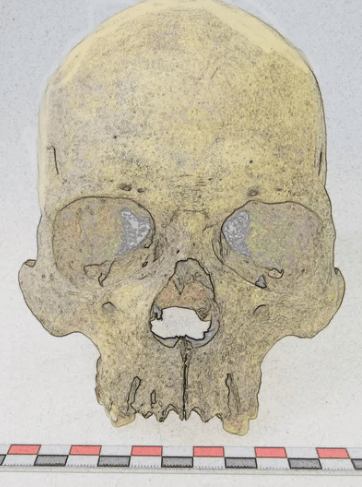
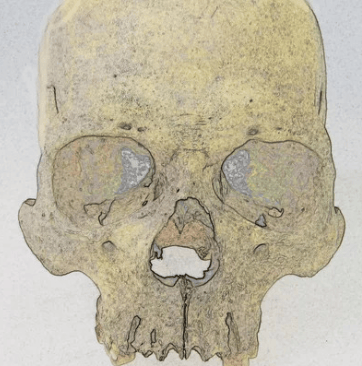
You might think Connersville, Indiana, a town where the most excitement is watching a tractor do laps in a cornfield, is a safe, sleepy place. You would be wrong. Because apparently, the ancestors of humans who liked carving stuff into stone decided to drop a very expensive piece of themselves along the Whitewater River. Enter a 4,270-year-old human skull fragment that has archaeologists, historians, and local conspiracy theorists simultaneously thrilled, baffled, and slightly queasy.
This isn’t just any “I found a weird rock” story. This is a story where a landowner, doing what people do when they’re bored in rural Indiana—wandering riverbanks—stumbles across a tiny piece of someone who had already been dead for millennia. And now that fragment has caused a minor social and academic whirlwind, giving Connersville the kind of attention that usually only follows celebrity scandal or a misplaced county fair mascot.
The Discovery: Landowner vs. Time
It began innocently enough: the landowner, whose identity is being kept private (because of privacy and lawsuits from amateur bone collectors), was inspecting the riverbank for artifacts. Perhaps they were hoping for old coins, arrowheads, or maybe just a rock shaped like Elvis. Instead, they found bone. Not a modern bone, not a dog bone, but unmistakably human, and unmistakably ancient.
“I thought it was just a weird rock at first,” the landowner told local reporters. “Then I realized it was bone. And then I realized it was… a skull. And I panicked a little.”
The Fayette County Coroner’s Office confirmed the fragment was human. Radiocarbon dating by the University of Georgia’s Center for Applied Isotope Studies dated it to roughly 2300 B.C., placing it squarely in the late Neolithic era.
“This discovery underscores the importance of our community's vigilance and the necessity of professional collaboration,” Coroner Eddie Richardson said. “I want to commend the landowner for their responsible action in immediately reporting the finding.”
Responsible action, yes. Freaking out and posting selfies with the skull on Facebook? Almost certainly also yes.
Meet the Skull: A Direct Message from the Stone Age
To the untrained eye, it’s a fragment of bone. To archaeologists, it’s a time capsule. To Connersville locals, it’s that unsettling feeling that maybe the past is watching, judging, and has bad dental hygiene. This fragment has endured thousands of years of floods, frost, and human ignorance, only to surface in a backyard that probably hosts more lawn gnomes than history majors.
Experts suggest the skull may belong to a member of the Adena culture, a group famous for ceremonial burial mounds, intricate stonework, and the uncanny ability to mess with future Hoosiers.
“Finding a fragment like this is rare,” said Dr. Anna Marie Johnson, a bioarchaeologist who studies pre-Columbian North America. “It can tell us about diet, health, and social practices of people who lived in the region long before Europeans arrived. In other words, it’s a direct link to someone who lived 4,000 years ago—and it’s been waiting in the dirt for someone bored enough to stumble over it.”
Diet, Diseases, and Dental Horror Stories
You might imagine that ancient Indiana residents lived a pastoral, serene existence of berry picking and early pottery classes. You’d be wrong. Osteological analysis suggests that late Neolithic humans had diets based heavily on river resources—fish, freshwater mussels, plants, and possibly small mammals. Forget gourmet; they were eating survival.
Isotopic analysis, the scientific equivalent of detective work with bones, can reveal what they ate in the last few years of life. The initial findings suggest a diet high in freshwater protein and limited agriculture, which, in modern terms, is basically “fish tacos and sad salads.”
Beyond diet, bones sometimes reveal disease, and this skull fragment isn’t entirely innocent. Early evidence points to potential dental abscesses, which means this person probably had a toothache that made every bite of river fish a literal pain. Imagine explaining to your dentist today that your ancestor had gnawing tooth pain 4,000 years ago and you still complain about a mild cavity. Perspective, people.
Social Life in 2300 B.C. Indiana
If this fragment could talk (and please, let’s all agree it cannot), it might complain about social hierarchies, shamans, and ceremonial obligations. The Adena culture is known for constructing burial mounds, suggesting complex social structures and religious rituals. This person might have been an esteemed member of society—or just the unfortunate neighbor who always got volunteered for ceremonial digging.
Whatever the case, this fragment survived floods, glacial shifts, and the steady encroachment of modern farming. Its endurance is a testament to human resilience—and the stubbornness of the dirt that refused to let go.
Local Reactions: Awe, Panic, and Memes
News of the skull spread like wildfire in Connersville. Social media exploded with reactions ranging from thoughtful (“This reminds us we are just temporary tenants on Earth”) to absurd (“Can I sell this on Etsy?”). Local Facebook groups debated whether it was cursed, a sign, or just mildly inconvenient.
“I can’t believe I complained about my dog digging holes,” one local commented. “Now I realize my yard is basically an ancient burial ground. Thanks, Indiana.”
Others saw opportunity: tourism, history clubs, TikTok videos, and perhaps a new Indiana-themed ghost tour. Because nothing says “fun weekend” like seeing something 4,000 years old and realizing it makes your existence feel brief and absurd.
Scientific Drama: Labs, Tests, and Bafflement
The skull is now in professional hands, undergoing isotopic and radiocarbon analysis. Scientists hope to determine not just diet and health, but migration patterns, social status, and even causes of death. It’s a slow process. Each test is like peeling back a layer of a story written in bone, preserved for millennia, then suddenly unrolled in a lab that smells faintly of ethanol and existential dread.
“Every bone tells a story,” Dr. Johnson says. “And this skull, though small, can tell us about the living conditions, social hierarchy, and possible diseases of its time. It’s like getting a text from the Stone Age—but without emojis. And you don’t have to reply.”
Darkly Comedic Reflections
There is something deeply absurd in realizing that while humans in 2025 worry about Netflix subscriptions, political bickering, and the latest TikTok trend, a fragment of someone who lived 4,000 years ago is casually reminding us that life goes on, and none of it matters.
The skull is a symbol: of time, mortality, and human irrelevance. It survived more floods, winters, and careless hands than any person alive today. And yet, a bored landowner tripping over it makes it headline news. It’s the ultimate cosmic joke, served with a side of Indiana mud.
the LA Hours © 2024
Reframe your inbox
Subscribe to our newsletter and never miss a story.
We care about your data in our privacy policy.