
Polar Bears: Russia’s New Landlords of the Arctic Abandoned Estates
In a surprising turn of events, polar bears have been spotted inhabiting an abandoned research station in Russia. These majestic creatures, once confined to the wild, are now making themselves at home in human-made structures. This unusual behavior raises questions about the changing dynamics of wildlife habitats and the impact of human activity on animal behavior.
WORLD NEWSFEATURED
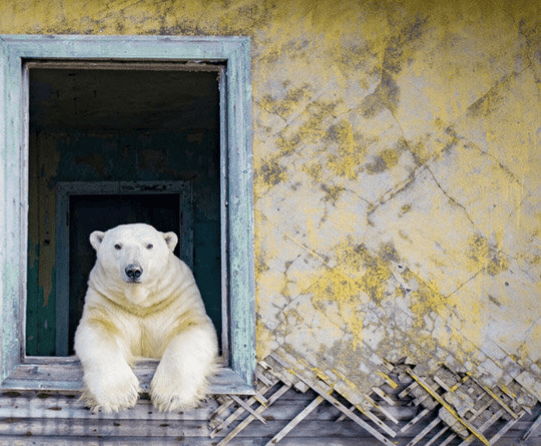
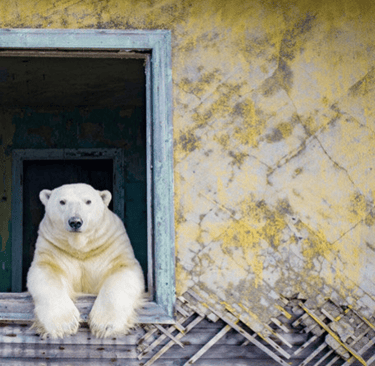
If you thought moving day was stressful for humans, imagine being a polar bear with too many icebergs melting under your paws and suddenly discovering an abandoned research station that smells faintly of freezer-burnt borscht. That’s exactly what’s happening on Kolyuchin Island, off Russia’s far-eastern coast, where polar bears are apparently redefining “home sweet home.”
Photographer Vadim Makhorov, whose drone footage has gone viral, captured the majestic beasts casually strolling through former scientists’ living quarters, inspecting fridges, and apparently wondering why no one left any snacks. “They naturally seek comfort and view such structures as cozy refuges,” Makhorov wrote on Facebook. Cozy, indeed — if your idea of cozy is “definitely colder than your average suburban living room but infinitely better than frostbite.”
The research station, once a hub for meteorological studies, is now the Arctic equivalent of a boutique Airbnb with zero human staff, complimentary sea views, and a strict no-party policy enforced only by the occasional growl. Scientists left decades ago when Russia pulled the plug on remote Arctic research, leaving behind a building full of peeling paint, broken equipment, and, unbeknownst to them, the polar bears’ dream crash pad.
The Bears Have Opinions
Polar bears, according to wildlife experts, are not exactly the “move-in-friendly” type. They’re apex predators with a flair for interior design only they understand: lounge on cold steel tables, scratch claws along peeling paint, and use old chairs as makeshift scratching posts.
“It’s both hilarious and terrifying,” says Sergei Belikov, a wildlife ecologist with the Russian Arctic Institute. “You watch a 900-pound bear casually walk through a hallway like it owns the place. And it does. We left, they moved in.” Belikov notes that this phenomenon isn’t entirely unprecedented; polar bears are famously opportunistic. But it is a dramatic escalation in “squatters’ rights.”
Climate Change: The Ultimate Landlord
Before humans start bragging about reclaiming Arctic real estate, climate change should get a thank-you card. Sea ice in the Arctic has been declining sharply, forcing polar bears to spend more time on land. According to the World Wildlife Fund, the loss of summer sea ice has reduced hunting grounds for polar bears by almost 40% in the last 30 years. Translation: food is scarce, human buildings are warm, and apparently Wi-Fi is optional.
“It’s not just laziness,” says ecologist Belikov. “It’s survival. And if that means taking over a building we abandoned decades ago, then so be it. We created the housing market crisis; now we’re surprised bears are house-hunting?”
When Wildlife Gets Edgy
Makhorov’s drone footage shows bears in positions reminiscent of humans doing absolutely nothing all day: sprawled across tables, staring at walls, and somehow looking judgmental. In one frame, a bear is perched near a window, gazing at the ocean like a Russian Dostoevsky novel in fur. The images are funny, unsettling, and vaguely threatening — the kind of “cute” photos that make you reconsider whether humans really belong at the top of the food chain.
Meanwhile, Russian authorities have issued their usual mix of warnings and shrugging. “Do not approach the bears,” a regional statement reads. Which is helpful if you plan to deliver pizza or just walk to the bathroom. Beyond that, officials have done little. After all, these polar bears are technically trespassing, but they’re not exactly violating zoning laws either.
What This Says About Humanity
This is not just a story about polar bears raiding empty buildings. It’s a story about how humans leave behind the world, and nature redecorates it with claws, teeth, and a side of existential dread. Our abandoned research stations are basically the open-floor-plan condos of the Arctic. And the tenants are exactly who you’d expect to fill them: huge, hungry, and utterly indifferent to rent.
Climate scientists point out that this could get worse. As ice continues to melt, bears will have fewer hunting grounds and more incentive to explore human structures, potentially including vacation cabins, coastal towns, and, yes, the occasional abandoned Airbnb.
“This is nature adapting,” Belikov says. “Or nature trolling us. Either way, we lose.”
The Darkly Comic Side of Arctic Real Estate
Imagine walking into your office one day to find a polar bear asleep in your swivel chair, a laptop chewed into pieces, and a sticky note reading, “Out hunting. Back never.” That’s the new reality in parts of the Arctic. Scientists, frustrated yet secretly amused, are left documenting behavior that seems almost cartoonish if you ignore the fact that a 1,000-pound predator could eat you in one bite.
Social media has gone wild with memes: bears posing in abandoned offices with the caption, “Work from home? I’ll take over.” There are even TikTok accounts chronicling their antics, featuring dramatic music and text overlays like “Bears 1, Humans 0.”
The situation highlights a larger point: humans thought they could control the Arctic, but nature has other plans. We built structures, abandoned them, and now the apex predators are running the Airbnb empire we never knew we’d create.
Conclusion: Squatters, Survival, and Sarcasm
So, what’s the takeaway from this bizarre housing crisis? Polar bears are clever, opportunistic, and now slightly judgmental tenants in human architecture. Humans are gone, ice is melting, and the Arctic has turned into a luxury condo for apex predators. And honestly, it’s hard to argue with them.
In the end, this is both funny and terrifying — a combination that science writers love but readers also never forget. If you were worried about polar bears, maybe consider who’s really squatting whom. Hint: it’s not us.
the LA Hours © 2024
Reframe your inbox
Subscribe to our newsletter and never miss a story.
We care about your data in our privacy policy.