
Pumpkin Spice Rivers: When the Arctic Turns Rusty Orange
Rivers in the Arctic are turning a rusty orange. The culprit? Freeze-thaw cycles in extreme cold are dissolving iron minerals which then leach into waterways.
WORLD NEWSFEATUREDSCIENCE
Scene: A Martian Stream in Alaska
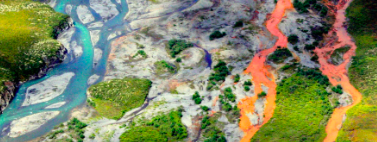
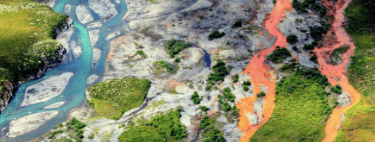
On a brisk September morning, geochemist Melissa Lau crouches by a stream near Utqiaġvik, Alaska’s northernmost town. She expected the water to be icy, clear, maybe tinted brown with peat. Instead, it’s orange. Not golden, not coppery — rust-orange, like someone tipped gallons of pumpkin spice latte concentrate into the tundra.
“This doesn’t look like Earth,” Lau mutters, dipping a vial into the current. The water fizzes faintly, and when she pulls it out, her gloves are streaked with iron-colored sludge. “It looks like Mars.”
And that’s the weird part: it’s not Mars. It’s the Arctic, a region humans like to imagine as pristine, white, and timeless. But lately, scientists have been reporting rivers and streams across Alaska, Canada, and Siberia turning an alarming shade of orange.
The culprit isn’t pollution or pranksters with food dye. It’s climate change.
Why the Arctic Is Rusting
The Arctic is built on permafrost — soil frozen solid for thousands of years. Inside that ice is a time capsule: ancient plant matter, animal remains, and minerals, all locked away. For centuries, they’ve been sealed, untouchable.
Now, as the climate warms, the permafrost is thawing and refreezing in strange cycles. During those freeze–thaw swings, minerals like pyrite and iron sulfides react with oxygen and water, releasing iron. That iron oxidizes, just like a nail left out in the rain. Result: rust-colored rivers.
“It’s like the Arctic is bleeding iron,” explains Lau. “Everywhere you look, orange streaks are spreading.”
The Scale of the Weirdness
This isn’t one stream, or two. Satellite images show networks of orange waterways spiderwebbing across northern Alaska. In some places, entire valleys look like someone spilled orange paint from the sky.
Local hunters and fishers noticed first. “The river we used for generations turned orange overnight,” recalls Iñupiat elder Jacob Nataruk. “The fish taste metallic. The water smells wrong. It’s like the land is sick.”
For Indigenous communities, the change isn’t just aesthetic. Rusty rivers affect drinking water, fishing grounds, and cultural lifeways deeply tied to the land.
The Science of Pumpkin Spice Rivers
Chemically, it’s a nasty cocktail. Tests show elevated levels of iron, but also arsenic and other metals that leach out alongside it. Fish exposed to the water show gill damage. Some die-offs have already been reported.
“It’s not just ugly,” says Lau. “It’s toxic.”
Yet there’s still so much we don’t know. The Arctic is remote, monitoring is sparse, and rivers can shift color dramatically from season to season. “We’re trying to study a moving target,” Lau adds.
Why This Matters Globally
The Arctic is the planet’s refrigerator. What happens there rarely stays there. Rusting rivers signal permafrost breakdown, which has two terrifying implications:
Carbon Release: Thawing permafrost releases greenhouse gases like CO₂ and methane, accelerating global warming.
Ecosystem Collapse: Once rivers turn toxic, fish populations crash, animals that depend on them starve, and Indigenous food systems unravel.
“It’s like pulling a thread in a sweater,” says Dr. Julianne Price, a climate scientist at the University of Alaska Fairbanks. “The whole thing unravels.”
Quirky Comparisons: Pumpkin Spice Apocalypse
Of course, the internet had a field day. Photos of orange rivers went viral with captions like:
“Starbucks must’ve spilled their pumpkin spice.”
“Mother Nature’s PSL season came early.”
“The Arctic ordered a rusty latte.”
Scientists groan, but admit the humor has a silver lining: it gets people talking. “If calling it pumpkin spice rivers helps raise awareness, I’ll take it,” Price shrugs.
Historical Echoes: When Rivers Change Color
The Arctic isn’t the first place with color-shifting water.
Spain’s Río Tinto runs red from natural iron deposits.
Colorado’s Animas River turned neon orange in 2015 after a mine spill.
India’s Brahmaputra has shifted hues during monsoon sediment surges.
But the Arctic twist is unique: this isn’t human pollution. It’s nature reacting to climate stress. That makes it scarier — and harder to fix.
Indigenous Voices: “The Land Speaks”
For Indigenous communities, orange rivers are more than science; they’re a message. “The land is speaking back to us,” says Nataruk. “For years, we were warned the ice was changing. Now even the rivers cry out.”
Some villages are adapting by shifting fishing grounds or hauling clean water from elsewhere. Others worry about cultural erosion. “If the fish die, our songs die,” one elder told researchers.
The Weird Future of Arctic Landscapes
If warming continues, more rivers could turn orange — maybe even entire watersheds. Imagine maps of the Arctic painted with streaks of rust. To scientists, it’s both fascinating and terrifying.
“It’s like watching a new biome form in real time,” says Price. “But it’s a biome nobody asked for.”
Could this reshape tourism? Possibly. Already, photos of orange streams are drawing curiosity. “People joke about Arctic pumpkin spice tours,” Lau laughs, “but I wouldn’t drink the water.”
The Limits of Fixing It
Can we stop the rusting? Not really. Unlike a mine spill, you can’t just plug a leak. The “leak” is the planet itself thawing. Some suggest engineered wetlands to filter metals, but scaling that to the Arctic’s vastness is daunting.
“This isn’t a cleanup problem,” Price says. “It’s a climate problem.”
Closing Scene: A Future Painted Orange
Back in Utqiaġvik, the orange stream glows against the snow, a surreal slash of color across the tundra. Lau caps her vial and sighs. “It’s beautiful in a horrifying way,” she says.
For now, the river keeps flowing — part water, part rust, part warning. The Arctic is changing faster than anywhere else on Earth, and it’s painting its message in orange.
Pumpkin spice rivers might make good memes. But for scientists and communities living there, they’re no joke. They’re the color of climate unraveling.
the LA Hours © 2024
Reframe your inbox
Subscribe to our newsletter and never miss a story.
We care about your data in our privacy policy.