
The Disappearing Reefs of the Caribbean
Projections suggest that many Caribbean coral reefs may erode or degrade by 2100, with sea-level rise outpacing reef growth — a serious warning for restoration efforts.
WORLD NEWSFEATURED
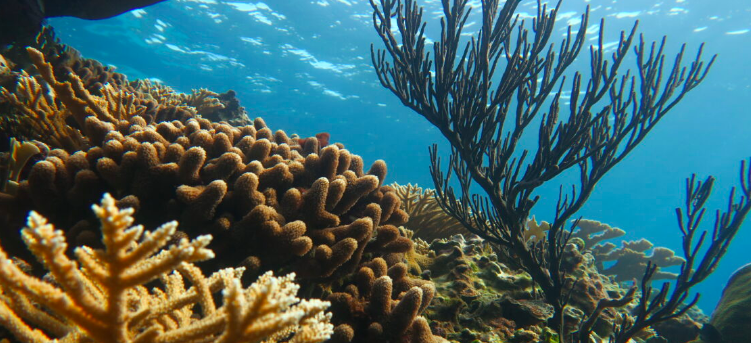
On a calm morning in Jamaica, the sea looks timeless. Fishing boats bob lazily offshore, tourists wade into turquoise shallows, and the horizon glows with the same endless blue that has defined Caribbean life for centuries. Yet beneath the water, the future is unraveling. Scientists now warn that many of the region’s coral reefs—the cradles of biodiversity, fisheries, and coastal protection—could erode faster than they grow by the year 2100.
The culprit is not just warming oceans but rising seas themselves. As climate change accelerates, sea levels are projected to climb faster than coral reefs can build their limestone skeletons upward. The result: reefs that have thrived for millennia may drown in place, unable to keep pace with the swelling tide.
“This is an existential threat for Caribbean reefs,” says Dr. Althea Morgan, a marine ecologist based in Barbados. “We’re not just talking about bleaching events or pollution anymore. This is the very architecture of the reef failing to keep up with the sea.”
Reefs as Living Breakwaters
For island nations, reefs are far more than ecological curiosities. They are natural breakwaters, dissipating wave energy and protecting coastlines from storms. They are economic engines, drawing millions of tourists each year to dive, snorkel, and marvel at the undersea kaleidoscope. And they are food banks, sustaining fisheries that feed local communities.
“If reefs collapse, it’s not just corals we lose,” says Morgan. “It’s livelihoods, it’s protection from hurricanes, it’s culture.”
The Caribbean has already seen reef cover plummet by more than 50 percent since the 1970s due to overfishing, disease, and coral bleaching. But the new projections add another layer of urgency: even if reefs could recover from these pressures, they may not grow quickly enough to keep pace with rising seas.
The Pace of the Ocean
Corals build their skeletons by extracting calcium carbonate from seawater, forming limestone structures that can rise millimeter by millimeter each year. Historically, that’s been enough to match modest sea-level changes. But current projections suggest that by 2100, seas could rise between 0.6 and 1.1 meters. For many reefs, especially those already weakened, that’s a race they cannot win.
“Think of it like trying to build a sandcastle while the tide is rushing in,” explains Dr. Peter Edwards, a coastal scientist with the Nature Conservancy. “No matter how fast you pile sand, if the water rises too quickly, you lose ground.”
Restoration vs. Reality
In recent years, coral restoration has become a beacon of hope. Dive teams have planted nursery-grown corals, scientists have experimented with heat-resistant strains, and community groups have fought to curb pollution. These efforts have had local successes—patches of reef springing back to life, fish populations rebounding, tourism revived.
But the new research forces a sobering question: what happens if the very foundation cannot keep up with the sea?
“It doesn’t mean we should stop restoration,” Edwards insists. “It means we need to rethink restoration. We must focus not only on corals that resist heat but also on structures that can physically keep pace with rising seas—whether that’s hybrid reef systems, artificial substrates, or even policy-driven reductions in greenhouse gases.”
Human Stakes
For the Caribbean, the stakes are deeply personal. In Belize, the barrier reef—the second largest in the world—draws more than $200 million annually in tourism. In the Bahamas, reefs shield Nassau and Freeport from storm surges. In Jamaica, fishers rely on reef ecosystems for protein that sustains families.
“If the reefs die, we lose part of ourselves,” says fisherman Samuel Clarke from Montego Bay. “It’s not just money. It’s our way of life. My grandfather fished these waters. My son does now. What happens when there are no fish left?”
A Call for Action
The science is clear: the window for preventing catastrophic reef loss is closing. Cutting global emissions is essential to slowing sea-level rise. At the same time, local measures—like reducing overfishing, curbing pollution, and protecting mangroves—can give reefs a fighting chance.
There is also a growing movement to integrate nature-based engineering—building artificial reefs that mimic coral structures, installing wave barriers that support natural reef growth, and using coral nurseries on a larger scale.
“The reefs of 2100 may not look like the reefs of the past,” Morgan admits. “But if we act boldly now, they can still exist. They can still protect, still feed, still inspire.”
The Vanishing Future?
Standing on a Caribbean beach, it is hard to imagine these vibrant underwater cities slipping away. Yet the projections are sobering: by the time today’s children grow old, much of what we take for granted may be gone.
Perhaps the most haunting aspect is the silence. Unlike hurricanes or earthquakes, reef decline is not dramatic. It is slow, almost invisible, a steady erosion beneath the waves. But when the breakwaters fail, when the fish are gone, when the tourists stop coming, the loss will be felt everywhere—from island villages to global economies.
The Caribbean reefs are not just ecosystems; they are living fortresses against a changing climate. Whether they stand or fall will depend on choices made in boardrooms, laboratories, and fishing docks today.
For now, the sea is still turquoise, the tourists still arrive, and the fish still dart among the corals. But beneath that beauty lies a question with planetary weight: will the reefs rise, or will the seas claim them?
the LA Hours © 2024
Reframe your inbox
Subscribe to our newsletter and never miss a story.
We care about your data in our privacy policy.