
The Flesh-Eating Fly That's Buzzing Toward Texas: A Screwworm Saga
Read on to see what this thing is and where it's headed.
HEALTHFEATURED
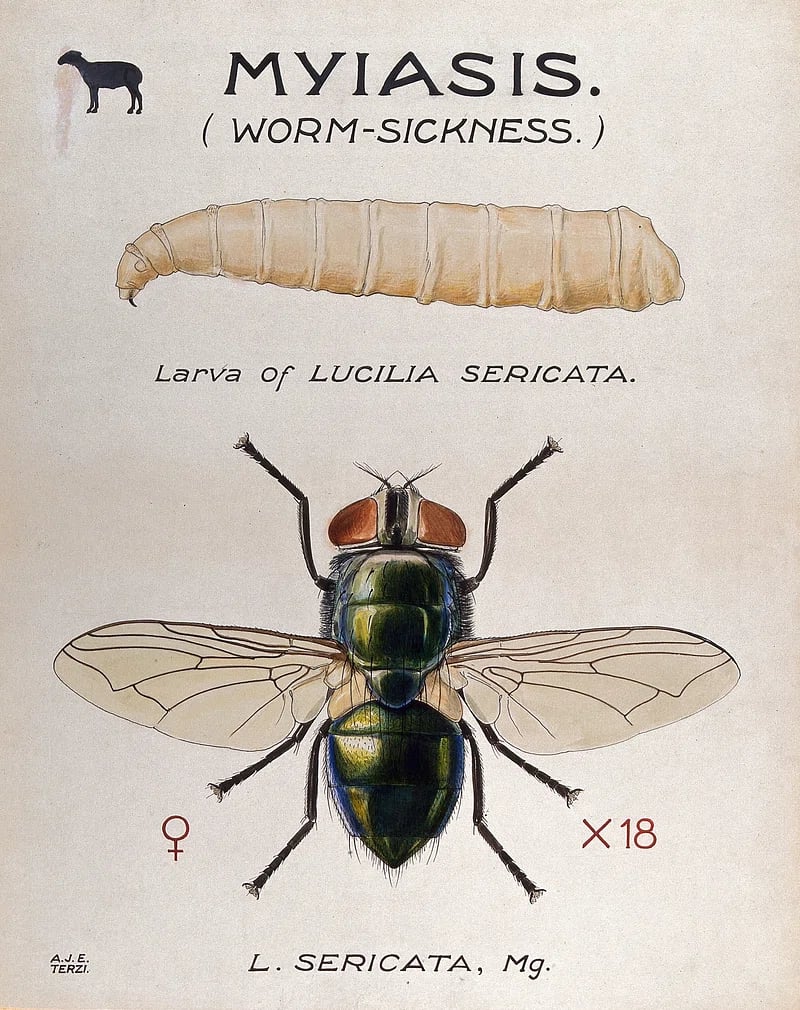
Ah, Texas. Land of big hats, bigger steaks, and apparently, an impending invasion by a parasite that sounds like it escaped from a low-budget horror flick. We're talking about the New World screwworm, that charming little fly whose larvae have a penchant for burrowing into living flesh and turning warm-blooded hosts into unwilling buffets. If you're picturing a scene from The Mummy but with cows instead of Brendan Fraser, you're not far off. And here's the kicker: this isn't some apocalyptic fan fiction. As of early 2026, Texas Governor Greg Abbott has slapped a statewide disaster declaration on the table, mobilizing resources faster than a cattle stampede because this pest is creeping northward from Mexico, eyeing the Lone Star State's livestock like a kid in a candy store. But fear not, dear reader—we're diving into this wriggling nightmare with a mix of snark and science, arming you with facts to impress at your next barbecue while hopefully keeping the actual barbecues screwworm-free.
Let's start with the basics, because knowledge is power, and power might just save your herd from becoming a maggot motel. The New World screwworm, scientifically known as Cochliomyia hominivorax (Latin for "man-eater," because why not go full dramatic?), is no ordinary blowfly. Unlike its less villainous cousins that munch on dead tissue, this one's an obligate parasite—meaning its larvae must feast on living flesh to survive. Picture this: an adult female fly, about the size of a housefly but with a metallic blue-green sheen and reddish-orange eyes that scream "evil genius," zeros in on any open wound. Tick bite? Scratch from a barbed wire fence? Even a fresh navel on a newborn calf? Jackpot. She lays up to 300 eggs in neat little batches around the edges, and within hours, those eggs hatch into larvae that dive headfirst into the host's tissue.
The maggots aren't subtle about it either. They secrete enzymes that liquefy healthy flesh, creating a deepening wound that can expand to the size of a softball in days. Multiple females might join the party, leading to hundreds of larvae squirming in unison—hence the "screw" in screwworm, from the way they twist into the meat like tiny drills. The infestation, called myiasis, causes intense pain, fever, and secondary infections. Untreated, it can kill an animal in a week or two. And yes, humans aren't immune; rare cases pop up in travelers or those with neglected wounds, turning a bad day into a body-horror episode. But here's the educational nugget: the life cycle is a speedy affair. Larvae mature in 5-7 days, drop to the ground to pupate, and emerge as adults in another week or so, ready to mate and repeat. Females mate only once, which, as we'll see, became their Achilles' heel in the fight against them.
Now, for a history lesson that's equal parts triumph and cautionary tale. The screwworm isn't new to the Americas—it's been plaguing the New World since at least the 1800s, with records of it tormenting livestock in the southwestern U.S. as far back as 1842. By the 1930s, it had hitchhiked eastward via infested animal shipments, infesting the Southeast and causing annual losses estimated at $100-200 million in today's dollars—think dead cattle, ruined hides, and endless vet bills. Ranchers in Texas and Florida were basically playing whack-a-mole with maggots, smearing wounds with smelly ointments like pine tar and hoping for the best. But the fly's range was limited by winter freezes; it couldn't survive year-round north of southern Texas or Florida, though summer outbreaks could flare up like bad acne.
Enter the heroes of this story: USDA scientists Edward Knipling and Raymond Bushland, who in the late 1930s dreamed up the Sterile Insect Technique (SIT). The idea? Mass-rear flies, sterilize the males with radiation (gamma rays, to be precise, zapping their late pupal stage without turning them into mutants), and release them in droves. Since females mate once, pairing with a sterile male means no viable offspring—population crash incoming. It sounds simple now, but back then, it was revolutionary. The first test run? The island of Curaçao in 1954, where they eradicated the fly in four months flat. Buoyed by success, the U.S. rolled it out stateside. Florida went screwworm-free by 1959, and Texas followed suit by 1966, with the last native case in the Southwest in 1982. The program pushed south through Mexico in the 1970s-80s and Central America by the 2000s, establishing a biological barrier at the Darién Gap in Panama. Billions of sterile flies were churned out from factories, dropped from planes like confetti at a pest apocalypse party. The cost? Over $750 million, but the payoff was huge: no more routine infestations, booming livestock production (Texas cattle numbers doubled post-eradication), and a model for controlling other pests like fruit flies.
But victory laps are short in the bug world. Fast-forward to 2023, and the screwworm starts resurgence mode, breaking containment in Panama and marching north through Central America into Mexico. By 2025, detections popped up in Veracruz, then closer—70 miles from the Texas border in Sabinas Hidalgo by October. Over 144,000 animal cases and 1,100 human ones reported in the outbreak. In August 2025, the first U.S. human case in nearly a decade hit Maryland—a traveler from El Salvador bringing an unwelcome souvenir. No local U.S. infestations yet, but the fly's northward creep, aided by warmer climates and possibly lapses in sterile fly releases, has everyone on edge. Enter Texas, stage left, with Governor Abbott directing the Texas Parks and Wildlife Department (TPWD) and Texas Animal Health Commission (TAHC) to form a joint New World Screwworm Response Team in June 2025. By late January 2026, that escalated to a full statewide disaster declaration, unlocking resources to monitor, educate, and prepare. Why the panic? Because Texas is cattle country, folks—12.5 million head strong, feeding into a $13 billion industry. An invasion could spell disaster.
Let's talk dollars and sense, because nothing gets Texans riled like a hit to the wallet. Back in the bad old days, a 1976 outbreak in Texas (one of those pesky post-eradication flare-ups) infested over 1.4 million cattle and 332,000 sheep/goats, costing producers $132 million in treatments, labor, and losses—adjusted for inflation, that's $732 million today, with a whopping $1.8 billion drag on the state economy. Scale that up nationwide, and you're looking at $4.3 billion in annual producer hits and $10.6 billion in total economic fallout across the historic range. It's not just cows; wildlife like deer (hello, $9 billion hunting industry) and even pets could suffer. Mortality rates vary—up to 50% in untreated calves—but even survivors lose weight, milk production tanks, and hides are ruined. Add in extra vet visits, insecticides, and the sheer hassle of daily wound checks, and ranchers could see operations grind to a halt. Oh, and beef prices? Expect them to spike as supply tightens, because who wants maggot-riddled meat on the menu?
But Texas isn't rolling over like a tick-infested steer. In August 2025, Abbott and U.S. Secretary of Agriculture Brooke Rollins announced a $750 million investment in a new sterile fly production facility at Moore Air Base in Edinburg, Texas—right on the front lines. This beast will crank out hundreds of millions of sterile flies weekly, bolstering the existing Panama plant (COPEG) that's already dispersing over 100 million a week but struggling to contain the surge. Federal agencies like USDA, DHS, CDC, and DOI ran a simulation exercise in January 2026 to game out an outbreak, practicing everything from surveillance to emergency response. On the ground, TAHC is ramping up education: ranchers are urged to inspect animals daily, treat wounds promptly with approved insecticides (like coumaphos or ivermectin), and report suspicious lesions pronto. Wildlife managers are monitoring deer and other game, while import bans on Mexican livestock since May 2025 aim to block hitchhikers.
Of course, Mother Nature's throwing curveballs. Climate change is warming things up, potentially expanding the fly's year-round range northward by 2045-2055. Warmer winters mean fewer natural die-offs, more outbreaks, and bigger headaches. Studies suggest the fly could reclaim old haunts in the Southwest and push into new territory, making SIT even more crucial. But here's the snarky silver lining: we've beaten this bug before with science, not shotguns. The key is vigilance—early detection via wound checks and reporting to vets or TAHC (call 800-550-8242 if you spot something squirmy).
In the end, the New World screwworm's potential Texas takeover is a reminder that nature doesn't respect borders, and pests don't take holidays. It's a billion-dollar buzzkill waiting to happen, but with response teams geared up, sterile flies swarming, and ranchers on alert, Texas might just swat this invader back south. After all, everything's bigger in Texas—including the fight against tiny terrors. Stay informed, stay snarky, and for goodness' sake, keep those wounds clean. Your cows (and your sanity) will thank you.
the LA Hours © 2024
Reframe your inbox
Subscribe to our newsletter and never miss a story.
We care about your data in our privacy policy.