
The Impossible Jay: When Birds Rewrite Evolution in Texas
Biologists documented a natural hybrid between a green jay and a blue jay—two species separated by significant evolutionary and geographic distance. Climate change is being considered a linking factor.
SCIENCEFEATURED
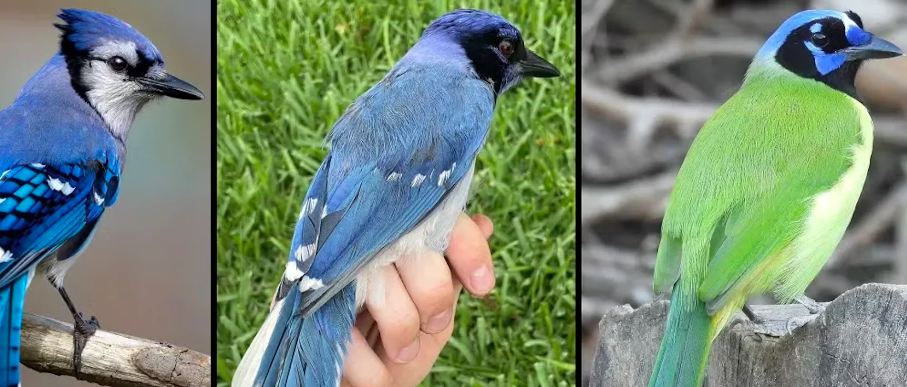
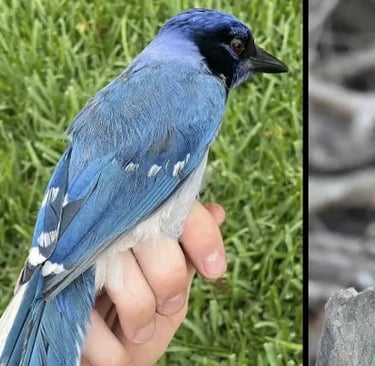
It started with a birder’s double take. In southern Texas, amid the usual cacophony of mockingbirds and cardinals, a flash of feathers puzzled even seasoned birdwatchers. The bird had the green body of a green jay, common to the Rio Grande Valley, but the crest and plumage hinted at a blue jay, a species more at home in North America’s temperate forests.
Could it be?
Biologists confirmed what seemed unthinkable: a natural hybrid between a green jay and a blue jay—two species separated not just by geography, but by millions of years of evolutionary distance.
“This is like finding a polar bear crossed with a panda,” said Dr. Maria Alvarez, an ornithologist at Texas A&M University. “It shouldn’t happen. And yet, here it is.”
How Hybrids Happen
Birds hybridize more often than people think—mallards cross with almost anything, and finches famously do on the Galápagos Islands. But the green jay/blue jay hybrid is unusual because their ranges barely overlap and their evolutionary lineages diverged long ago.
So how did it happen? Scientists point to climate change. Shifts in habitat may be bringing species into closer contact, creating overlap zones where they never mingled before. Add in the opportunism of birds (which aren’t picky if populations are thin), and the improbable becomes possible.
A Bird That Breaks Rules
The hybrid jay is more than just a curiosity for birders; it’s a challenge to assumptions about species boundaries. If two distinct lineages can produce viable offspring, what does that say about the rigidity of species?
“Evolution is messy,” Alvarez noted. “We like clean categories, but nature often colors outside the lines.”
For birdwatchers, though, the jay has become a kind of celebrity. Social media buzzes with photos, and birders have traveled miles hoping to catch a glimpse. “It’s the ultimate ‘life list’ bird,” one Texan birder admitted.
The Future of Hybrids
As climate change reshapes ecosystems, scientists expect more hybrids like this. That could mean new species, or it could destabilize fragile populations. For now, the Texas jay is a quirk—a feathered reminder that nature is full of surprises.
And somewhere in Texas, an oddball bird chirps in defiance of the evolutionary playbook.
the LA Hours © 2024
Reframe your inbox
Subscribe to our newsletter and never miss a story.
We care about your data in our privacy policy.