
The Interstellar Messenger: What 3I/ATLAS Tells Us About Our Place in the Galaxy
A newly discovered interstellar object, likely from the Milky Way’s “thick disk,” is passing through the Solar System. Scientists are making plans to observe it using various spacecraft (e.g. Psyche, Mars orbiters, JUICE) when possible to learn more of its composition.
WORLD NEWSFEATUREDSCIENCE
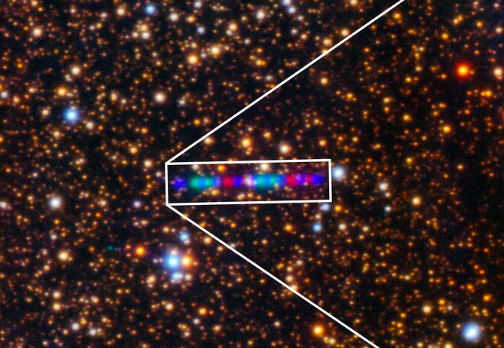
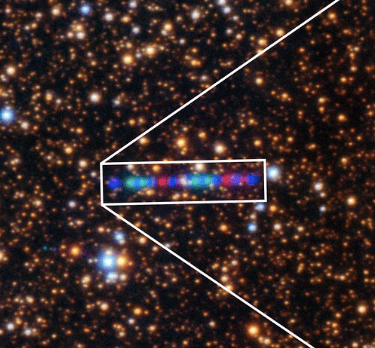
On a crisp August evening, as twilight deepened across Hawaii’s mountaintop observatories, a faint streak of light moved against the constellations. At first glance, it looked like any other comet: icy, distant, anonymous. But as astronomers tracked its path night after night, something extraordinary became clear. This object wasn’t orbiting our Sun—it was merely passing through.
They named it 3I/ATLAS (C/2025 N1). It is only the third confirmed interstellar object in human history, following 2017’s enigmatic cigar-shaped ‘Oumuamua and 2019’s comet-like Borisov. Unlike the countless comets and asteroids bound to our solar system, 3I/ATLAS is a cosmic refugee, forged around another star and now drifting on a one-time visit.
For scientists, it’s a discovery that borders on the miraculous. “These objects are like bottled messages from the galaxy,” says Dr. Karen Meech, an astronomer at the University of Hawaii who also studied ‘Oumuamua. “They carry the chemistry of distant star systems, untouched for billions of years. Each one is a chance to look at raw material from places we can’t otherwise reach.”
A Rare Visitor
Interstellar objects are vanishingly rare—at least from our vantage point. Astronomers suspect that trillions of rocks and icy bodies are ejected from star systems during their formation, flung into the void by gravitational pinball games between planets. But because space is unimaginably vast, only a handful ever wander close enough to Earth for us to notice.
3I/ATLAS is unusual in another way. Early calculations suggest it comes not from the galaxy’s familiar thin disk—the flat, star-strewn plane where our solar system resides—but from the thick disk, an older, more mysterious region filled with stars born more than 10 billion years ago. If confirmed, this would make it not just an interstellar visitor, but a relic of the Milky Way’s ancient history.
“Studying its chemistry is like scooping up a piece of galactic archaeology,” says Dr. Avi Loeb, the Harvard astronomer known for his bold interpretations of ‘Oumuamua. “It may hold signatures of conditions that no longer exist in our part of the galaxy.”
The Scramble to See
The problem is, 3I/ATLAS won’t linger. Hurtling at tens of thousands of miles per hour, it will grow brighter in Earth’s skies for only a few months before fading into the blackness forever. Astronomers have already booked precious telescope time around the globe. Some are even exploring the feasibility of a space mission—a long shot, but not impossible.
The European Space Agency’s JUICE probe, currently en route to Jupiter’s moons, and NASA’s Psyche mission, bound for a metal-rich asteroid, are being considered for opportunistic observations. Even Mars orbiters could play a role.
“Every instrument we can turn toward it matters,” says Dr. Linda Spilker, a veteran planetary scientist at NASA’s Jet Propulsion Laboratory. “If we can measure its composition—what gases it releases, what ices it carries—we’ll know if planetary systems everywhere are built from the same cosmic recipe.”
A Cosmic Mirror
Beyond science, the discovery resonates with a deeper human instinct: wonder. Since antiquity, comets and strange lights in the sky have stirred both fear and imagination. Today, instead of omens, we see them as signposts pointing to our cosmic connectedness.
“These interstellar objects remind us that our solar system is not isolated,” says Meech. “We’re part of a galaxy where matter is constantly moving, mixing, and reshaping. Some of the atoms in our own bodies likely traveled similar journeys billions of years ago.”
In that sense, 3I/ATLAS is more than a rock. It’s a reminder that the universe is not static but alive with motion, exchange, and possibility. In a time when human societies feel fractured and inward-looking, the arrival of an object from another star feels like a quiet nudge: you are not alone in the cosmos.
As it streaks past, leaving no trace but the data it inspires, 3I/ATLAS becomes part of our story. Long after it vanishes into the abyss, its brief visit may help us answer one of humanity’s oldest questions: Are we typical, or unique? Does life spring from the same cosmic dust scattered everywhere, or is Earth an anomaly?
For now, all we can do is watch—and wonder.
the LA Hours © 2024
Reframe your inbox
Subscribe to our newsletter and never miss a story.
We care about your data in our privacy policy.