
The Month the Sky Went Dark: September’s Twin Eclipses
A total lunar eclipse occurred on September 7, visible from large parts of Asia, Africa, and Australia. A partial solar eclipse is expected on September 21–22, 2025, visible in parts of the Southern Hemisphere (Australia, Pacific Islands, Antarctica, etc.). This eclipse will obscure ~80–85% of the Sun in optimal locations. In the UAE and surrounding regions, the lunar eclipse will appear as a “blood moon” (deep red hue). Because of how long the eclipse lasts, it’s drawing attention.
WORLD NEWSSCIENCEFEATURED
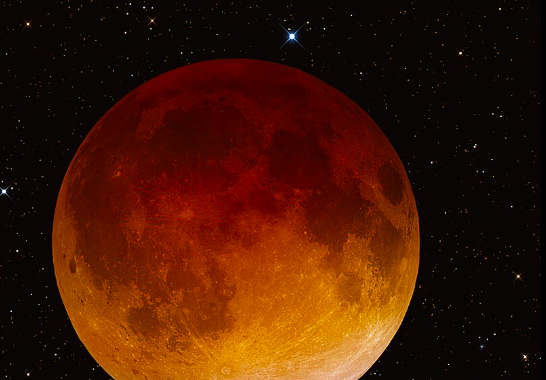
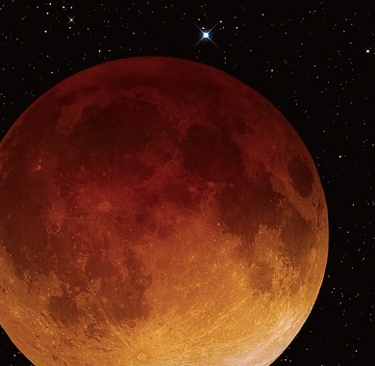
On the evening of September 7, the moon rose in parts of Asia, Africa, and Australia as a deep, otherworldly shade of red. People climbed rooftops, gathered on beaches, or simply craned their necks from city sidewalks to watch. It was a total lunar eclipse, the kind of celestial event that has inspired myth and poetry for millennia. Just two weeks later, on September 21–22, the heavens will stage an encore: a partial solar eclipse sweeping across the Southern Hemisphere, blotting out as much as 85 percent of the sun in some remote corners of the world.
Two eclipses, two hemispheres, one month. The universe has always been a master storyteller—but September 2025 feels like a special chapter.
A Blood Moon Over Continents
The lunar eclipse, visible across vast swathes of the Eastern Hemisphere, lingered long enough to become a cultural moment. In Ethiopia, families sat under clear night skies, children pointing to the crimson orb with awe. In Sydney, amateur astronomers lined Bondi Beach with telescopes, offering passersby a closer look. In Dubai, the eclipse was dubbed a “blood moon,” the phrase ricocheting across social media with images that looked like something out of science fiction.
“The moon looked alive, like it was breathing,” said one observer in Johannesburg. “It’s hard to watch and not feel small, like you’re part of something bigger.”
For astronomers, the red hue is easily explained: sunlight bending through Earth’s atmosphere filters out blues and greens, scattering them away while allowing reds to reach the moon’s surface. But the sense of mystery remains. Eclipses remind us that science and wonder can coexist—that explanations don’t rob events of their magic, but deepen it.
The Coming Shadow
If the lunar eclipse was a spectacle of color, the upcoming partial solar eclipse is one of absence. Across Australia, the Pacific Islands, and parts of Antarctica, the sun will dim as the moon takes a slow bite out of its face. In the right locations, more than four-fifths of the sun will vanish, turning day into an uncanny twilight.
Solar eclipses, even partial ones, carry an electricity in the air. Birds go quiet. Shadows sharpen. People instinctively hold their breath. “It’s like the universe is pressing pause,” says Dr. Priya Natarajan, a Yale astrophysicist. “You’re aware of the mechanics—the geometry of orbits—but in the moment it feels intimate, like the cosmos is performing just for you.”
Ancient Fears, Modern Eyes
For much of human history, eclipses were seen as omens. Ancient Chinese records describe dragons devouring the sun. In the Mayan codices, lunar eclipses were linked to jaguars and sacrifice. Even in the Bible, eclipses appear as portents of change.
Today, we celebrate them with Instagram posts and watch parties, yet the emotional charge hasn’t vanished. Crowds still gasp, still cheer, still feel the hairs rise on their necks when the light bends in ways that defy everyday experience. The only difference is that now we can predict them to the minute, track their paths across continents, and even livestream them globally.
A Global Moment of Pause
In a world fragmented by politics, borders, and crises, there’s something quietly unifying about an eclipse. Everyone beneath its shadow, from farmers in Papua New Guinea to office workers in Melbourne, experiences the same celestial rhythm.
“We spend so much time staring at screens, worrying about our little worlds,” says Natarajan. “Eclipses remind us that we live in a solar system, that our lives are tethered to vast cosmic motions we can’t control. That humility is healthy.”
After the Shadow
When the last sliver of moonlight fades, or the sun returns in full force, life resumes—traffic flows, children bicker, emails pile up. Yet something lingers. Those who witness eclipses often describe them as transformative, even spiritual. Not because they change the course of history, but because they remind us that history itself plays out under skies that have their own stories.
September 2025 will be remembered as a month of shadows and light, of crimson moons and sunlit crescents. Together, the eclipses form a kind of celestial duet—one reminding us of Earth’s protective atmosphere, the other of the fragile dance between sun, moon, and planet.
For those lucky enough to watch, it’s a rare invitation: to look up, to remember, and to be astonished.
the LA Hours © 2024
Reframe your inbox
Subscribe to our newsletter and never miss a story.
We care about your data in our privacy policy.